
Opportunity Architecture
Not every lead is an opportunity. Advancement is earned when objective evidence supports the next investment of time, effort, and attention.
Does the opportunity align with priorities?
Pursuit begins with fit.
Is there a clear reason the customer should care beyond price, convenience, or curiosity?
Is there enough evidence to justify continued pursuit, or is the opportunity consuming resources without advancement?
Ask early. Ask often. Unasked questions create hidden risk.
The Ultimate Law of Value
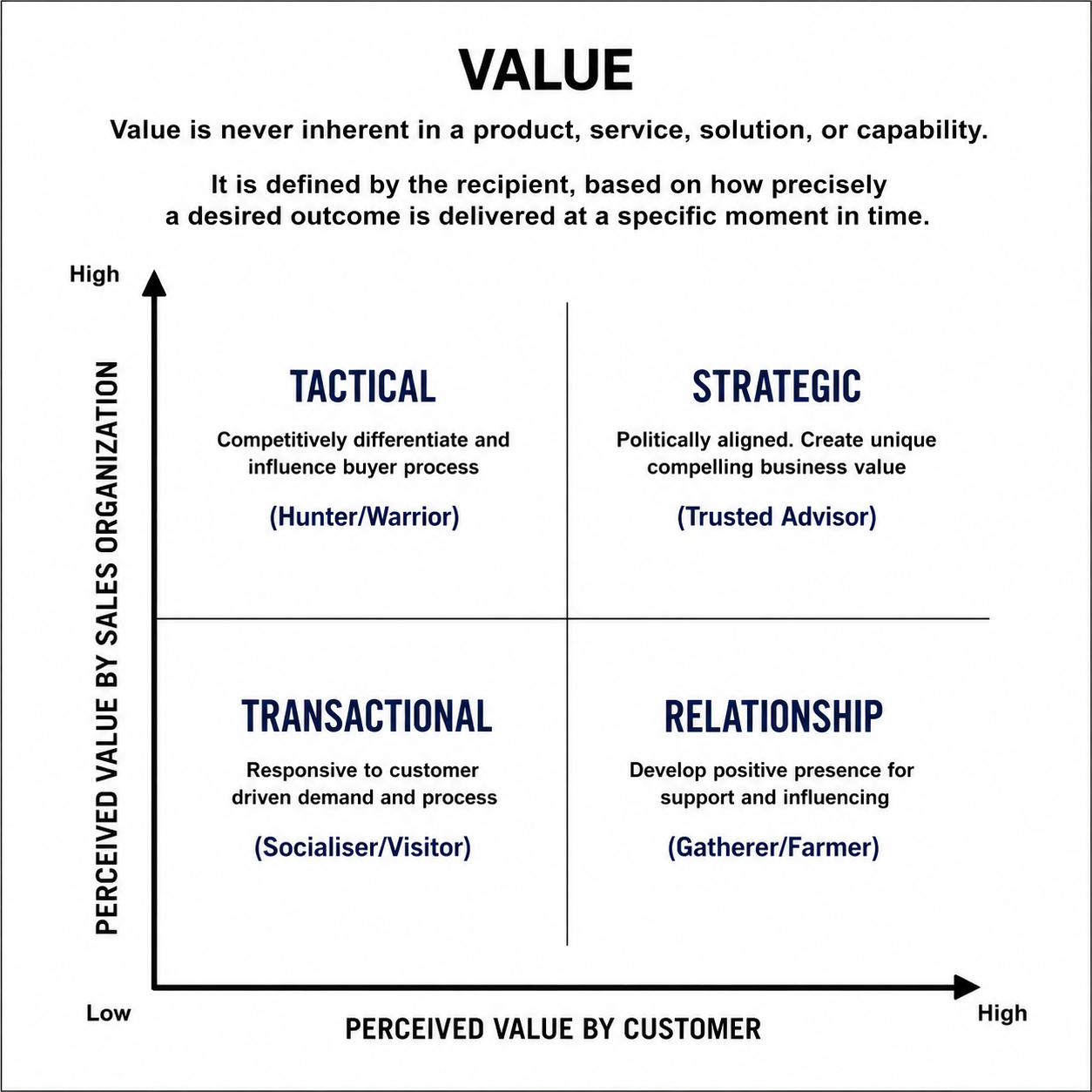
Value is never inherent in a product, service, solution, or capability.
Value is defined by the recipient.
It is determined by how precisely something addresses a specific need, solves a structural problem, reduces meaningful risk, creates a desired outcome, or fulfills an important purpose at a specific moment in time.
Business development is the disciplined pursuit of qualified opportunities, especially where the greatest value can be recognized.
Advancement is earned, not assumed.
A lead does not become an opportunity because someone showed interest. It advances only when objective criteria support the next investment of time, effort, and attention.
A real business issue, goal, gap, risk, or desired outcome is visible.
The right people can be identified, reached, and engaged.
The possible outcome is meaningful enough to justify action.
The provider’s capabilities can credibly support the customer’s need.
There is a reason to act now, soon, or within a defined planning cycle.
Progress is based on observable commitment, not hope.
A useful next step benefits both sides.
“Schedule a follow-up” is weak. “Schedule a 45-minute technical evaluation with the IT team by Friday to determine whether the top three workflow requirements are addressed” is a stronger joint-venture goal.